
Climate Action & Environment
Empowering vulnerable communities with dignity and sustainable support
Thematic Introduction
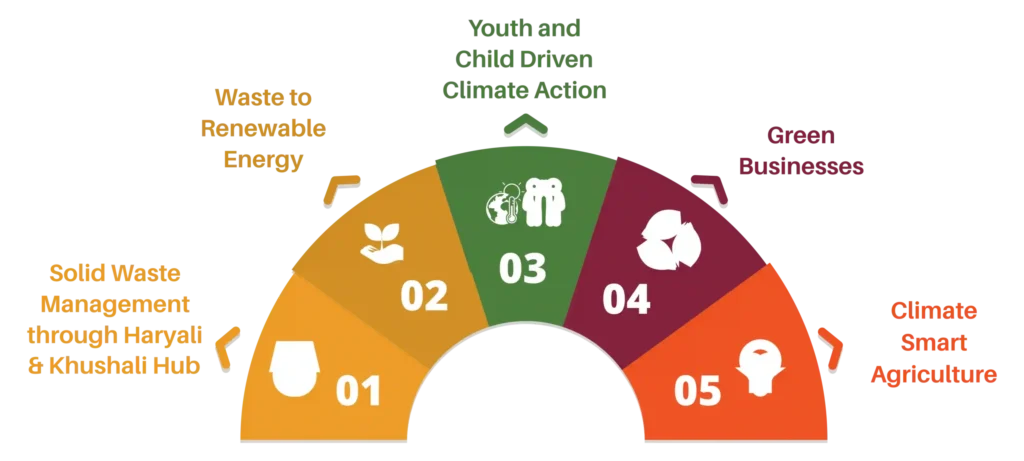
The Climate Change & Environment Programme aims to build resilient and adaptive communities by addressing the growing impacts of climate variability and environmental degradation through integrated, people-centered approaches. The programme promotes climate adaptation by strengthening local capacities to anticipate, prepare for, and respond to climate-related risks, particularly among vulnerable populations. A strong emphasis is placed on youth- and children-led policy advocacy, empowering young people as agents of change to influence climate action, environmental governance, and sustainable development at local and national levels.
The programme also advances environmental stewardship by encouraging community ownership of natural resources, promoting biodiversity conservation, and fostering sustainable land and water management practices. Through the development of sustainable waste management systems, including waste reduction, recycling, and safe disposal practices, the initiative supports cleaner, healthier living environments. Climate considerations are further integrated into WASH interventions, ensuring access to safe water, sanitation, and hygiene services that are resilient to floods, droughts, and other climate shocks.
Climate Facts of Pakistan
Understanding the Climate facts to deliver targeted, life-saving interventions
Vulnerability
Ranked 5th most vulnerable country to long-term climate risks
-Global Climate Risk Index 2024.
Air Pollution
Ranked 2nd most
polluted country globally
-IQAir, 2023
Temperature Rise
From 1981 to 2005, Pakistan’s temperature rose 0.39°C per decade, more than double the global average of 0.18°C.
-IQAir, 2023
Air Pollution
Per capita water availability declined from 2,172 to 1,306 cubic meters (1990–2015) due to climate change and overuse.
-IQAir, 2023
What We Envision
1
A climate-resilient
Pakistan
where vulnerable groups like women, youth, minorities, and girls have fair access to resources and opportunities to adapt to climate change.
2
A sustainable,
low-carbon Pakistan
where climate change is included in all development plans, focusing on clean energy, energy efficiency, and responsible resource use.
3
A climate-secure
Pakistan
where communities participate in climate actions with access to information, tools, and funding for adaptation and emission reduction.
Sub-Themes Of Climate Action
Graphical Focus
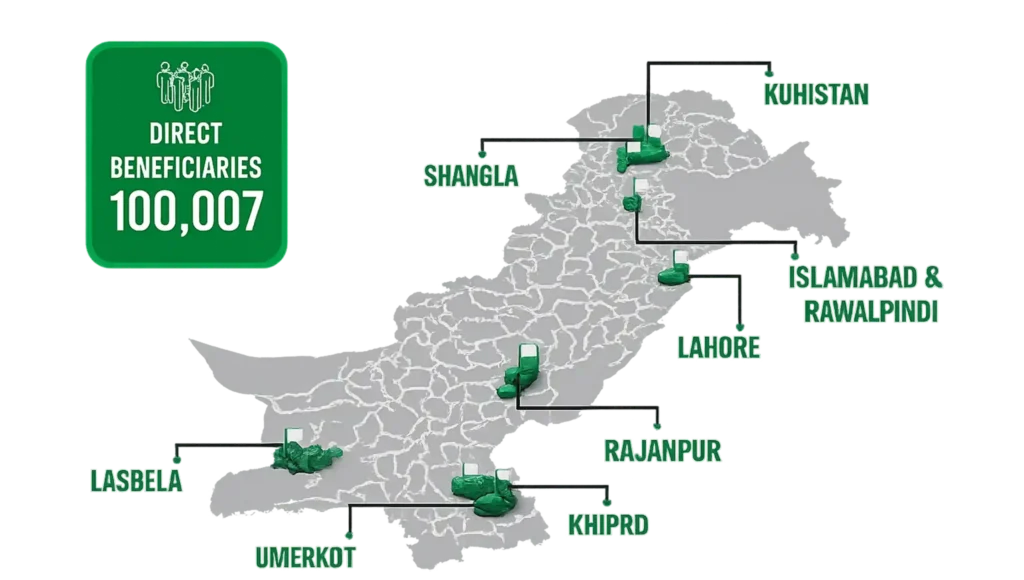
Pak Mission Society (PMS) has a strong and diverse geographical presence across Pakistan, reflecting its commitment to reaching vulnerable and underserved communities nationwide. PMS operates in multiple provinces including Khyber Pakhtunkhwa, Punjab, Sindh, and Balochistan, with interventions extending from remote mountainous regions to densely populated urban centers. Its footprint covers key districts such as Charsadda, Peshawar, Shangla, Kohistan, and Neelum Valley in the north; Islamabad, Rawalpindi, Lahore, Faisalabad, Sheikhupura, Gujranwala, Sialkot, Jhang, and Rajanpur in Punjab; and a wide range of districts in Sindh including Karachi, Hyderabad, Larkana, Dadu, Sanghar, Mirpur Khas, Umerkot, Tando Allahyar, Badin, Thatta, and Tharparkar. PMS also maintains a presence in Balochistan, including districts like Quetta and Jaffarabad. This wide geographic reach enables PMS to design and deliver context-specific, inclusive, and impactful programs, ensuring that no community is left behind regardless of location, climate, or social background.
Our Key Principles
Together, We Can Transform Health Systems.
Your generosity empowers vulnerable communities across Pakistan with education, healthcare, and sustainable livelihoods.
Donate Now